Art and Culture of Ancient Rome: Story Part 1 – Grades K-3
[one_half] Click here to play or pause the audio. [/one_half]
[one_half_last]
 Use this scrollbar to read along,
viewing the entire story and visuals.
[/one_half_last]
Docent Instructions: The word Pause is the suggested point in which to pause the story and to ask your students to share ideas with the students next to them about what they learned in the previous part of the story for approximately 1 to 3 minutes. This allows for cooperative learning to occur.
Art and Culture of Ancient Rome: Story Part 1 – Grades K-3
Copyright Denise T. Federico 6/03/05
“Buongiorno young people! This means good day in Italian. We’re here in Rome, Italy for winning first place in our school’s history contest. We must now make a video, which includes as many sites that remain from Ancient Roman Times. The title of our video will be ‘A Roman Holiday.’ We’ll each take turns in filming different ancient ruins or what is left of ancient sites in Rome.”
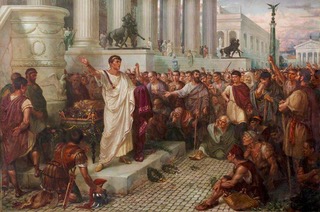
“Meanwhile, friends, Romans, countrymen and students lend me your ears! That may sound funny to your ears, but it is a famous line from a play written by a famous man with a funny name, William Shakespeare. The play is ‘Julius Caesar,’ who was a very famous Emperor of Ancient Rome.”
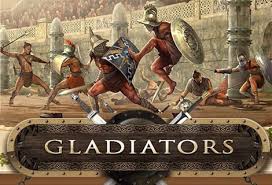
“Miss Amore, my name is Julius, probably because my family came from Rome, I know a lot about it. They had chariot races and men in armor called gladiators.”
“Indeed, Julius, you can film this site right here, “the Coliseum”
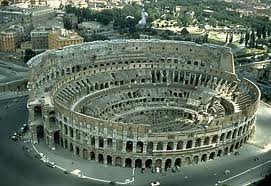
where those chariot races took place and the gladiators fought. It is one of the huge stadiums in Rome. Can you imagine watching a ball game from this sports stadium?”
[one_half]
[/one_half] [one_half_last]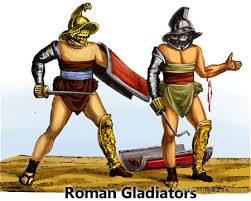 [/one_half_last]
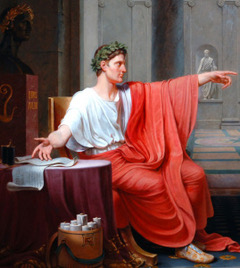
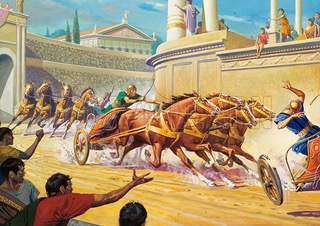
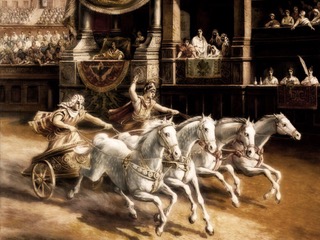
“Hey guys, could you lend me your ears here, again? Ancient Rome was an Empire, which means it was a large group of states under one leader who usually was the ‘Emperor,’ much like a King. It goes back about 3,000 years ago. In that time there was a lot of war going on, so people were very violent in the way they lived and had fun. That’s why warlike activities were enjoyed — things like the gladiators fighting to the death in the Coliseum, wild animals fighting each other, and chariot races.”[one_half]
[/one_half] [one_half_last]
[/one_half_last]
(Pause here.)
“The Romans had a plan. Think about how we planned this trip to Rome. When you have a plan that is important to you, you feel excited about it and proud of your ideas of what you want to do. Well the Roman’s plan was that they wanted to spread out and take over the world, conquer the peoples of other lands. When they did this they made many of the people they took over Roman citizens. This is how they became an Empire instead of just one country. Everywhere the Roman armies went; they brought their culture with them. They took their customs, laws, religions, and their language with them too!”
“It is said that Ancient Rome thought of itself as ‘Caput Mundi,’ ‘Head of the World.’ ”
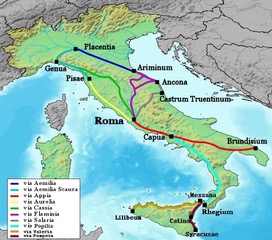
“ ‘All Roads Lead to Rome’ is another famous saying that tells a lot about the way the Romans built their buildings and roads. Building is a kind of art called ‘architecture.’ You know the Ancient Greeks created great architecture, beautiful buildings. But the Romans did even more and on a larger scale than the Greeks. The Romans were great road builders and their idea was to connect all the roads to a central point. All Roman roads actually did lead back to Rome!”
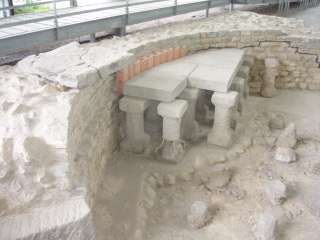
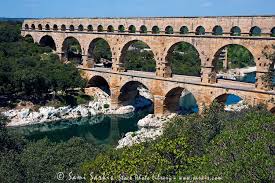
“The Romans also developed new building materials called concrete. Concrete helped them build the roads and other architectural structures. They invented the Roman arch, which was a structure that was curved on top. The arch was so important because it meant that a much bigger room and space could be made. Many more people could fit inside the space. Roman architecture led to making buildings at a new level, past where the Ancient Greeks left off. Because of how hard and durable their concrete invention was, they could span great domes, build bridges, and aqueducts that carried water from the source where it came from to the cities where it was used.”[one_half]
[/one_half] [one_half_last]
[/one_half_last]
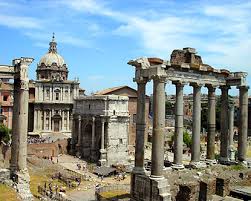
“Now, Lucia, we arrived at the Roman Forum. Will you film these ancient ruins? The Roman Forum was a place where the Roman people would meet
their friends to hear the daily news or to buy and sell things in shops or even go to school. It was probably one of the first shopping malls.”
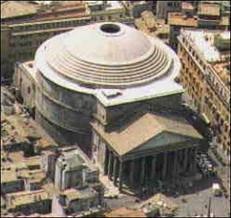
“Great Roman architecture like the Roman Forum, the Coliseum, and the Pantheon, which we will talk about next class, are models from what is called the Classical Period. Ancient Greek and Roman Art are both called the Classical Period of Art. This Classical Period then inspired great Italian art and architects or builders in the future called the Renaissance time.”
(Pause here.)
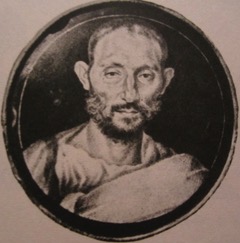
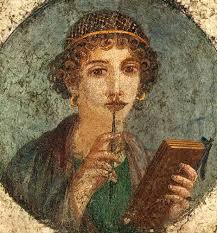
“Before we finish for today we must talk about how the Romans also found their own style of art especially in ‘Portrait’ [one_third]
[/one_third] [one_third]
[/one_third] [one_third_last]
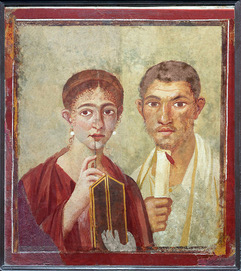
[/one_third_last]painting, which is a painting of a person. They looked closely at a person’s special likeness. Then, Roman artists painted people exactly how their faces really looked. This is one of the main differences between Ancient Roman and Greek art. We are going to do some portrait paintings here in Rome. Each one of you has a special face that nobody else has. This will be part of our video too!” Your parents and teachers will love to see your portraits of how you really looked on this trip!”
“We had so much fun learning about Ancient Rome today and we will continue with our ‘Roman Holiday’ next time we meet.”